
Boat Salvage Experts
Ready to haul or tow your boat off to the salvage yard? Great, we can remove any boat on land or sea including sailboats, motorboats, catamarans or yachts. Boat trailer or not. Best part, we handle the entire boat salvage process, making maritime disposal as easy-breezy as it gets. Our full array of marine salvage services include everything from water tow services, derigging, mast stepping, fuel and water pump outs, boat ramp exchanges, haul-out coordination, road transport, diving and crane deployment when necessary, and then finally dismantling and disposing of boats offsite or onsite.
How Much Does Marine & Boat Salvage Cost?
If you’re wondering the cost of marine salvage or how to get rid of a boat altogether, here’s a few key factors that will play a role in the cost or estimate: Length and beam/width of the boat, location of boat, disposition (land or water), nearest haul out or boat ramp, tow service requirements or is the vessel under its own power, condition of the vessel, fluids onboard, and finally type of vessel (sailboat, yacht etc.). The aforementioned are some main aspects that form adequate marine salvage price quotes.
Some other interesting topics related to the cost of marine salvage have to do with the disposition of the boat; is the boat sinking or sunken? Are divers and float devices needed to recover the boat? Are we able to use our float devices or does the boat need to be scrapped of any barnacles before proceeding? All these details are ironed out with your call to Boat Remover.
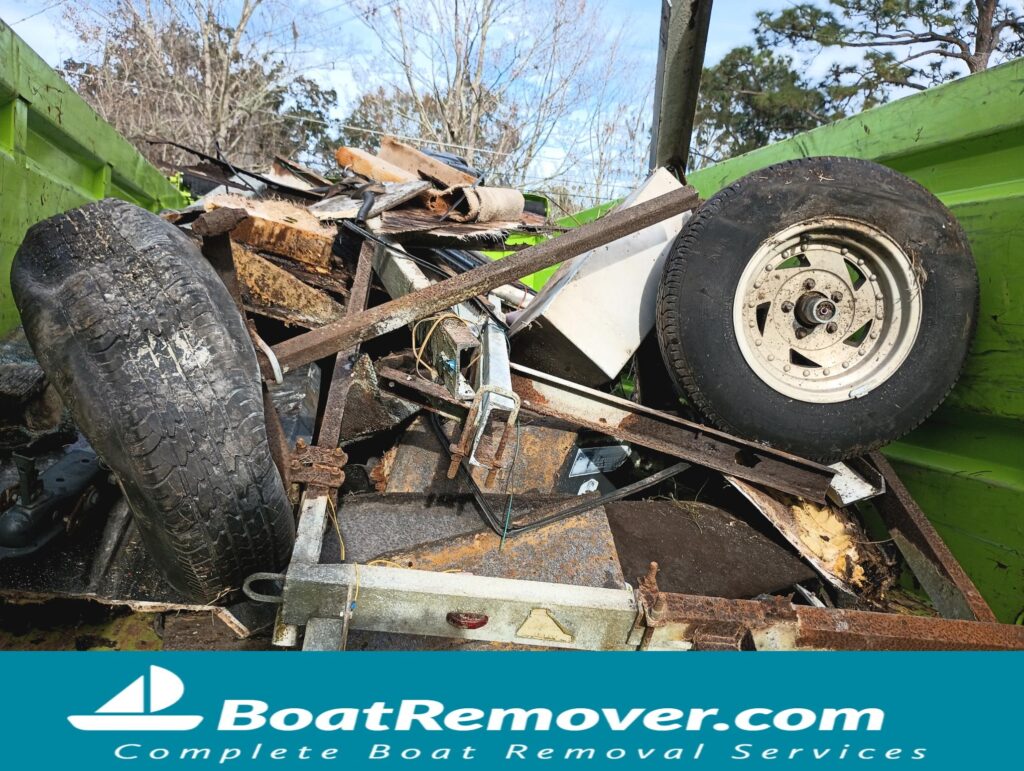
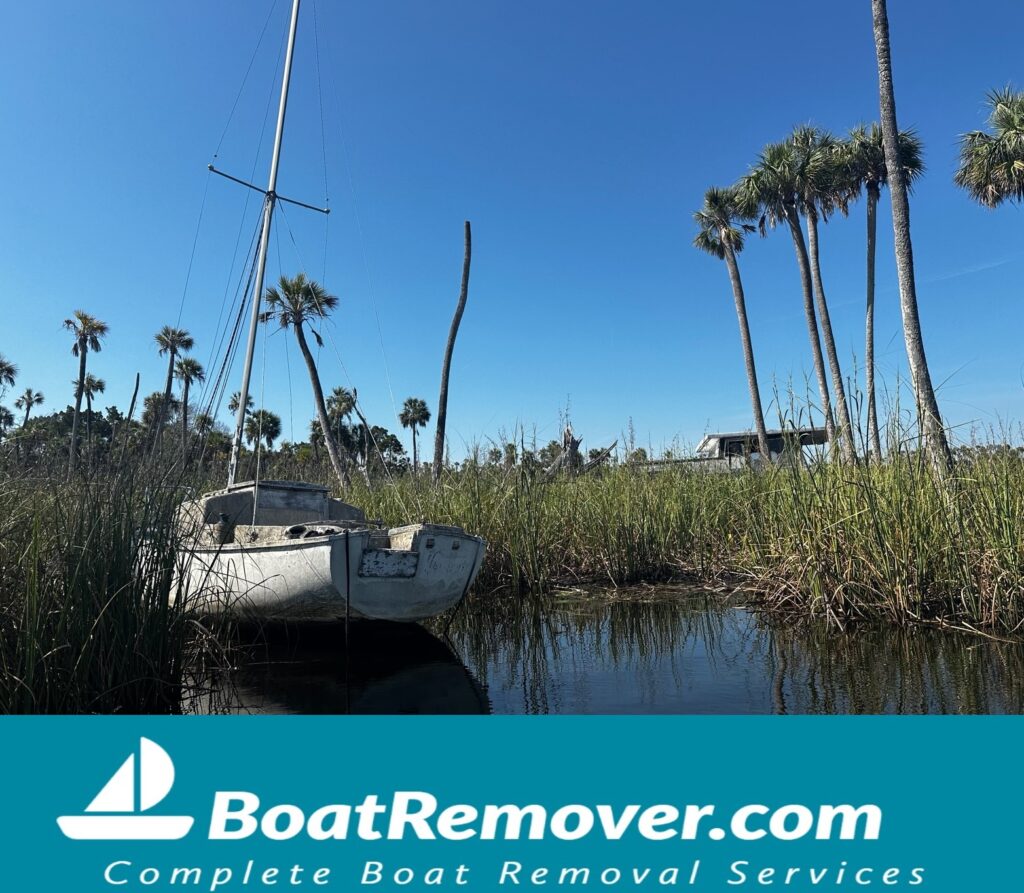
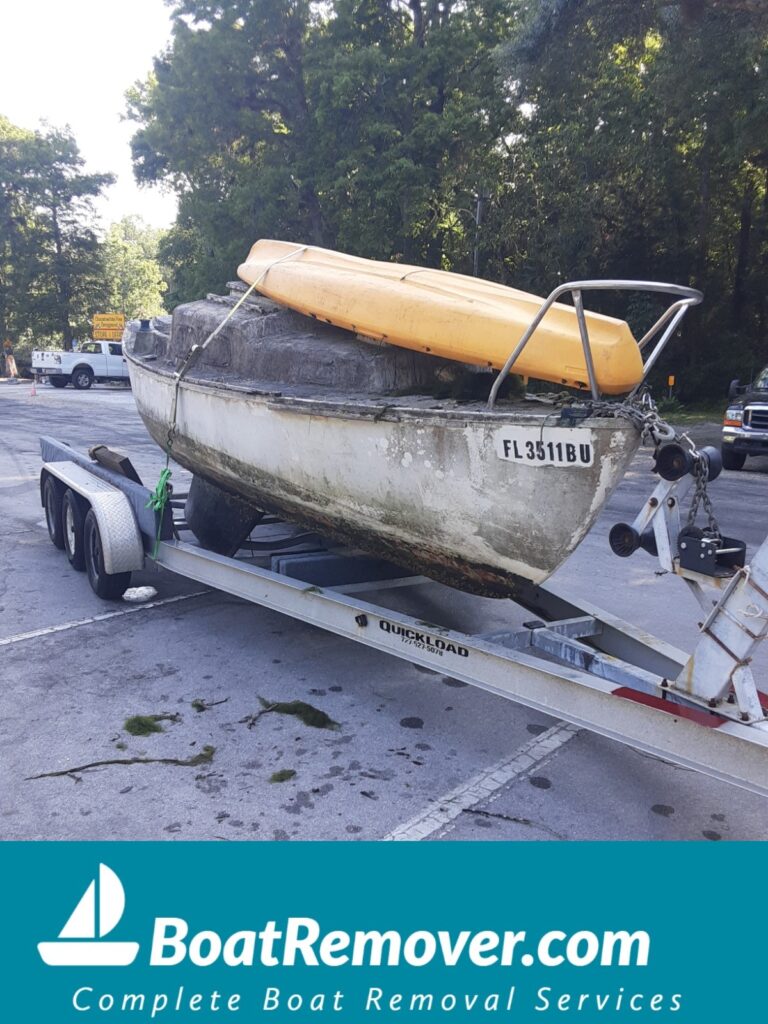
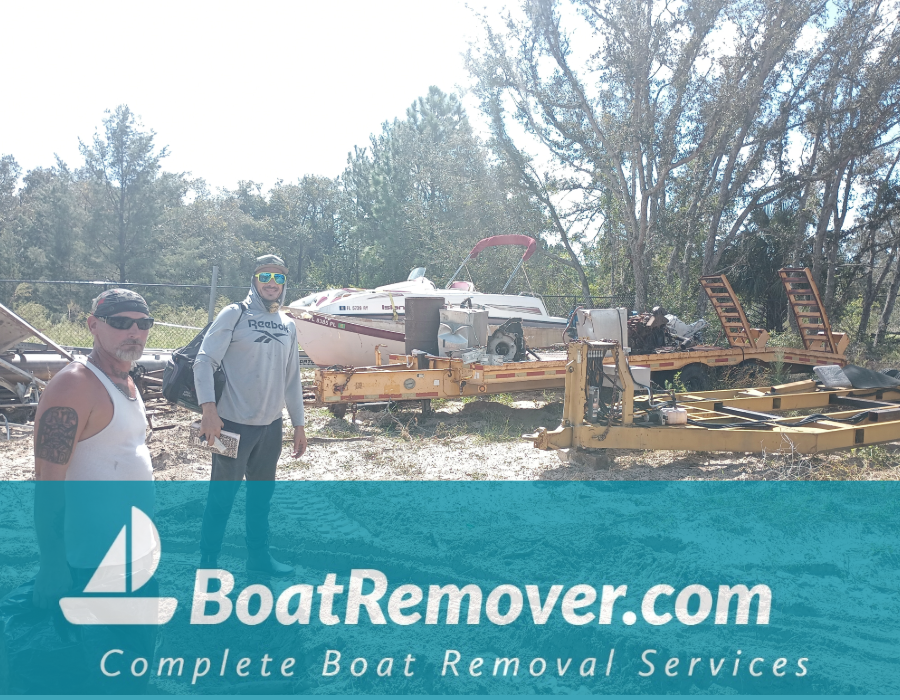
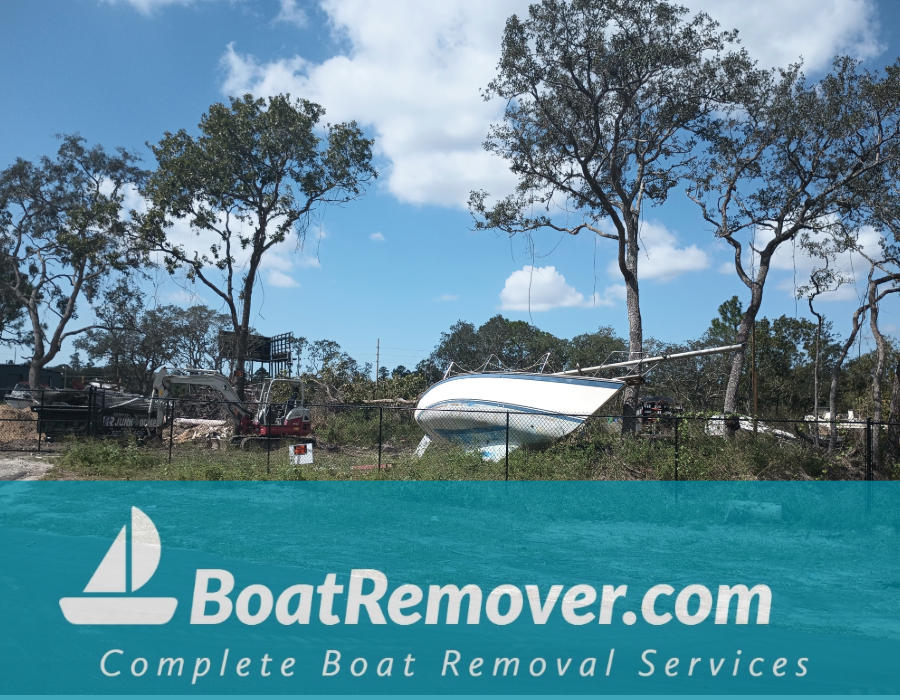
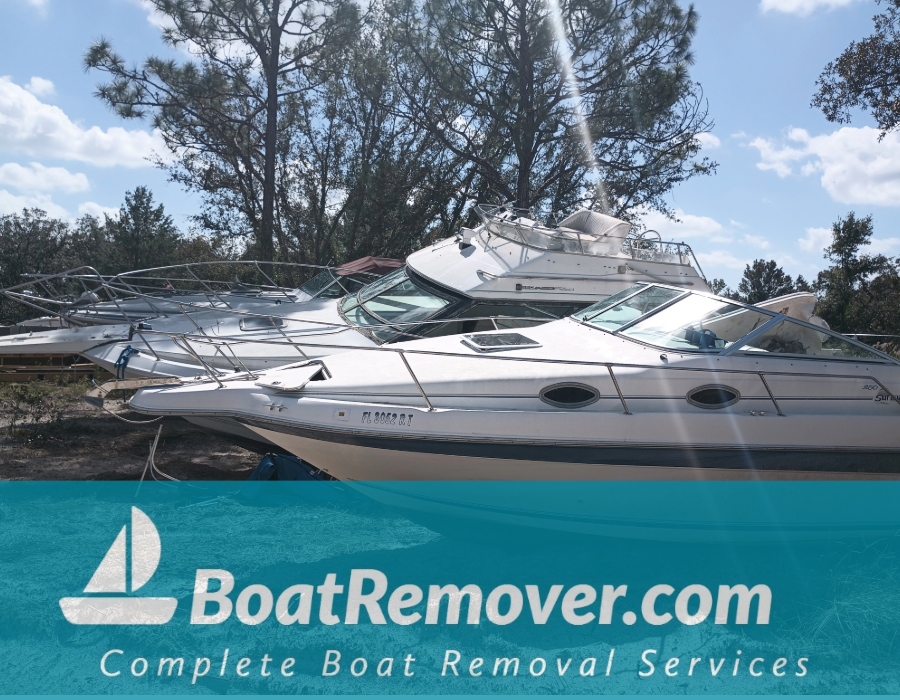
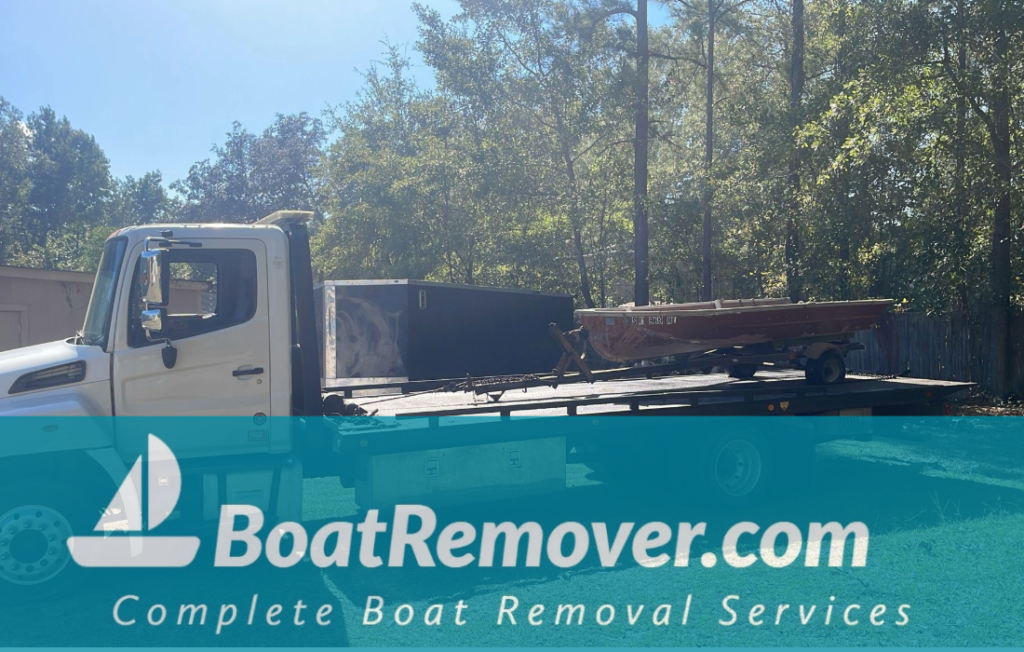
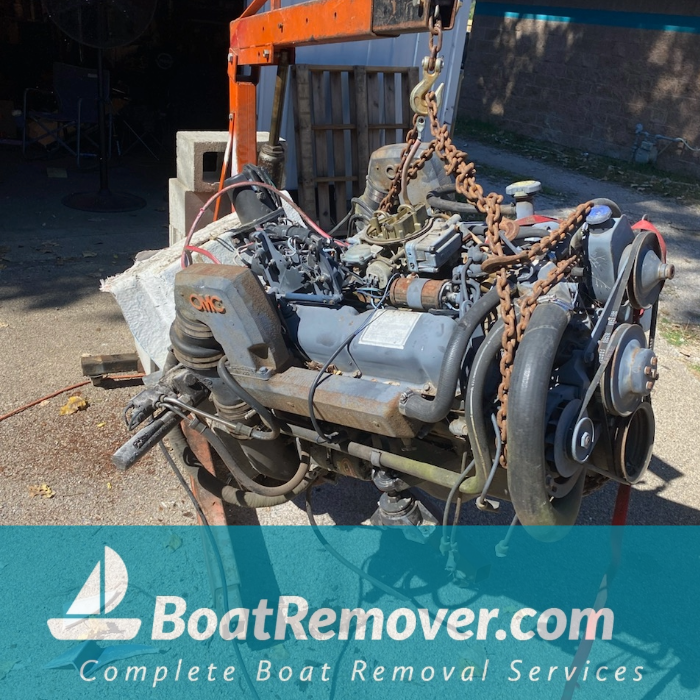
AAA Customer Service for Boat Salvage
Aside from providing the boat salvage service itself, we put in the effort to make the salvage experience as smooth and wake free as possible. In most cases boats are removed easily, especially boats on driveways, boatyards, marinas or storage. However, some boat salvage jobs can be riddled with growth and barnacles… in lamest terms messy.
When we arrive at a salvage job on the water, the unknown becomes known. Even though a boat owner hires us and explains everything they know about the vessel’s current situation, there’s sometimes environmental elements that change the scope of work. At Boat Remover, we plan for most changes to provide you with what we call AAA Boat Removal Service.
Boat salvage is a vital but often overlooked aspect of maritime activity. It protects waterways, supports environmental conservation, and helps manage the lifecycle of vessels responsibly. Whether recovering a valuable boat, removing a dangerous wreck, or recycling materials from an aging vessel, salvage operations serve both practical and ecological purposes.
As boating activity continues worldwide, the importance of professional, ethical, and environmentally conscious boat salvage will only grow. Understanding how salvage works help boat owners, policymakers, and the public appreciate its role in keeping waterways safe, clean, and navigable.
Salvage Yard Expediting
Boat Removers are go-to experts who offer solutions to expediting your boat’s best logistical path to marine salvage yards or we handle all the salvaging, repairing, and repurposing of the boat and marine equipment. The choice depends on the logistics of the boat’s location and the time frame involved in the job at hand. Importantly, the type of boat, sailboat or catamaran can make all the difference in choosing which solution for salvage is best suited to meet our price-point and our customers’ satisfaction.
Salvage Yards & the Boating Community
So, let’s dive into this complete exploration and discover the ins and outs of marine salvage yards, including their functions, services, and the crucial role they play not only in BoatRemover.com but in the maritime community. Read below for more information on salvage yards.
Salvage Yards
- Marine Salvage Yard’s Role & Purpose
- Boat Storage and Disposal
- Marine Salvage Yards Costs and Pricing
- Repair and Refurbishment at Salvage Yards
- Environmental Remediation
- Services Offered by Marine Salvage Yards
- Wreck Removal
- Boat Recovery
- Salvage Diving
- Boat Recycling
- Salvage Fees
- Storage Fees
- Disposal Costs
- Labor and Equipment Costs
- Environmental Compliance Costs
- Salvage Yard Discussion Summed Up
Marine Salvage Yard’s Role & Purpose
First off, what are marine salvage yards, and what’s their role or purpose? They are facilities dedicated to the salvage, storage, and recycling of vessels, marine equipment, and related materials.
These yards serve as repositories for salvaged boats, shipwrecks, and marine artifacts, offering a range of services to salvage operators, marine insurers, government agencies, and private individuals. The primary purpose of marine salvage yards is to recover, repair, and repurpose marine assets following accidents, disasters, or abandonment.
Boat Remover’s Salvage Boat Removal Expediting Service and Marine Salvage yards are involved in a variety of salvage operations, including wreck removal, any boat recovery including sailboats, and salvage diving. Our salvage operators deploy specialized equipment such as cranes, winches, divers, and salvage vessels to extract, tow, and refloat vessels stranded or sunk in navigable waters. Salvage yards provide staging areas for salvage operations, offering facilities for equipment storage, maintenance, and logistical support.
Boat Storage and Disposal
Salvaged boats and marine equipment are stored at marine salvage yards pending decree of salvage claims, insurance settlements, or legal proceedings.
Salvage yards may provide secure storage facilities for salvaged assets, offering protection from theft, vandalism, and environmental damage. Additionally, salvage yards oversee the disposal of unclaimed or unsalvageable boats, recycling materials and components in accordance with environmental regulations.
Marine Salvage Yards Costs and Pricing
The costs and pricing associated with marine salvage yards vary depending on factors. To name a few would be the boat’s length and beam, and storage duration.
Moreso, salvage yard and marine service pricing takes into consideration the complexity of salvage operations, not only the size but also the condition of salvaged assets, and the scope of services required.
Repair and Refurbishment at Salvage Yards
Most marine salvage yards offer repair and refurbishment services for salvaged boats (not all do, be sure and check first) restoring them to seaworthy condition or repurposing them for alternative uses.
Skilled craftsmen and marine technicians at salvage yards perform hull repairs, engine overhauls, structural modifications, and cosmetic enhancements to salvageable boats. Salvage yards may also refurbish salvaged equipment such as engines, generators, winches, and navigation systems for resale or reuse.
Environmental Remediation
Salvage yards are responsible for environmental remediation and pollution prevention measures associated with salvage operations.
Salvage operators work to mitigate environmental damage caused by boat accidents, spills, or leaks, implementing strategies to contain, recover, and dispose of pollutants safely. Marine salvage yards adhere to environmental regulations governing hazardous materials handling, waste disposal, and pollution prevention, minimizing the ecological impact of salvage activities.
Services Offered by Marine Salvage Yards
Salvage Consultation: Marine salvage yards provide consultation services to salvage operators, insurers, and vessel owners, offering expertise and guidance on salvage planning, risk assessment, and recovery strategies.
Salvage experts assess the feasibility and logistics of salvage operations, providing recommendations for equipment, personnel, and contingency planning.
Wreck Removal
Marine salvage yards specialize in wreck removal services, utilizing specialized equipment and techniques to extract, dismantle, and dispose of sunken or stranded boats.
Salvage operators employ cranes, barges, divers, and cutting tools to raise, cut, and remove wrecked boats from navigable waters, restoring navigational safety and environmental integrity.
Boat Recovery
Marine salvage yards facilitate boat recovery operations, assisting vessel owners and insurers in retrieving boats stranded, grounded, or adrift due to accidents, storms, or mechanical failures.
Salvage operators deploy towboats, salvage vessels, and underwater equipment to stabilize, refloat, and tow distressed boats to safety, minimizing damage and preventing further loss.
Salvage Diving
Marine salvage yards employ skilled divers and underwater technicians to perform salvage diving operations, inspecting, repairing, and recovering submerged vessels and marine equipment.
Salvage divers conduct underwater surveys, inspections, and repairs, utilizing specialized tools and equipment to assess damage, seal leaks, and secure salvageable assets.
Boat Recycling
Some marine salvage yards offer boat recycling services, dismantling and recycling decommissioned, abandoned, or damaged boats in an environmentally responsible manner.
Salvage operators dismantle boats, segregating recyclable materials such as metal, glass, and plastic for processing and reuse. Salvage yards collaborate with recycling facilities to maximize resource recovery and minimize waste generation.
Salvage Fees
Salvage fees are charges levied by marine salvage yards for their services, including wreck removal, vessel recovery, salvage diving, and storage.
Salvage fees may be calculated based on factors such as the value of salvaged assets, the level of risk and difficulty associated with salvage operations, and the extent of services provided. Salvage yards may charge fixed fees, hourly rates, or contingency-based fees contingent upon the successful completion of salvage operations.
Storage Fees
Storage fees are charges for storing salvaged boats and equipment at marine salvage yards pending resolution of salvage claims, insurance settlements, or legal proceedings.
Storage fees may be assessed based on factors such as the size and duration of storage, the value of salvaged assets, and the facilities and amenities provided. Salvage yards may charge monthly or daily storage fees, with rates varying depending on the type and size of assets or in this case boats stored.
Disposal Costs
Disposal costs encompass expenses associated with the disposal of unclaimed or unsalvageable vessels, as well as the recycling or disposal of salvaged materials and components.
Disposal costs may include fees for waste disposal, recycling services, environmental remediation, and regulatory compliance. Salvage yards collaborate with recycling facilities and waste management providers to ensure the proper handling and disposal of salvaged materials, minimizing environmental impact and liability.
Labor and Equipment Costs
Labor and equipment costs are significant components of salvage yard expenses, covering the wages of salvage personnel and the operation and maintenance of salvage equipment and machinery.
Labor costs may be calculated based on hourly rates for salvage technicians, divers, and support staff, while equipment costs may include rental fees or usage charges for cranes, winches, barges, and specialized tools. Salvage yards may pass these costs on to clients through service fees, surcharges, or itemized billing.
Environmental Compliance Costs
Environmental compliance costs encompass expenses related to complying with regulatory requirements governing salvage operations, hazardous materials handling, waste disposal, and pollution prevention measures.
Salvage yards invest in training, monitoring, and documentation to ensure compliance with environmental laws and regulations, minimizing the risk of fines, penalties, and legal liabilities. Environmental compliance costs may be factored into overall pricing structures or passed on to clients as separate charges for environmental services.
Recovering a Boat in Distress: Key Scenarios and Steps
Recovering or salvaging a boat varies greatly depending on the circumstances, such as whether it’s stuck on the bottom, flooding, completely underwater, or simply an aging vessel you want to retire properly. Without specific details about your situation, here’s a breakdown of the typical cases with actionable guidance.
1. Boat Stuck on the Bottom (Grounded on Sand, Mud, or Rocks)
This is a frequent issue for everyday boaters.
- Prioritize safety first: Confirm all passengers are secure and equipped with personal flotation devices. Shut off the engine immediately to prevent propeller or mechanical issues. Inspect for any breaches in the hull.
- Attempts to free it promptly:
- Redistribute weight by moving people or gear toward deeper water or the rear to raise the stuck section.
- Raise outboard or sterndrive engines if applicable.
- Carefully engage reverse thrust, retracing your incoming path if feasible.
- For sailing vessels, tilt the boat by having occupants shift to one side or using rigging to heel it over.
- Deploy a secondary anchor: Use a tender or swim one out to deeper water astern, then use winches or engine power to pull free.
- Leverage the tide: If the water level is rising, anchor securely and wait for natural refloating.
- When efforts fail: Avoid aggressive maneuvers that could worsen damage. Seek assistance from specialized services like towing companies or Boat Remover if you plan to completely dispose of the vessel.
Aggressive reversing on hard surfaces often leads to significant harm.
2. Boat Flooding or Partially Submerged
Quick response is essential to avoid total loss.
- Focus on crew safety: Evacuate if the vessel becomes unsteady; broadcast a distress call if necessary.
- Control the water entry: Locate the source and apply temporary fixes, like soft plugs, fabric patches, tarps, or sealing compounds.
- Prevent movement: Drop anchors or secure lines to land or docks.
- Remove water: Activate onboard pumps, use them manually if that’s your only means to pump, or deploy extra pumps. Adjust weight distribution to maintain stability.
- Upright if overturned: Smaller craft can often be righted with ropes or manual effort; bigger ones require expert intervention.
- Escalate promptly: If dewatering falls behind inflow, summon professional recovery teams right away.
3. Completely Submerged Boat
This involves high risks, special equipment, experience and complexity- DIY recovery is usually impractical except for tiny vessels.
- Pinpoint the location: Rely on recent coordinates, underwater searches, or detection equipment.
- Hire specialists: Reach out to dedicated marine recovery firms (often through insurers or local providers). Common techniques involve:
- Underwater sealing of breaches.
- Deploying inflatable buoys or rigid floats for added lift.
- Using barges with cranes for hoisting.
- Introducing air to displace water.
- Financial considerations: Expenses can range widely, but policies with wreck removal clauses frequently reimburse.
- Legal and ecological aspects: Owners typically must act swiftly to retrieve the vessel, preventing fuel leaks or navigational hazards and avoiding penalties.
4. Retiring an Aging or Unwanted Boat
For non-urgent cases involving damaged or obsolete vessels:
- Market it: Offer for sale on online platforms, even at low cost or including extras like trailers.
- Harvest components: Strip out reusable items (motors, gear, rigging) for individual sales.
- Utilize dedicated facilities: Locate nearby marine scrap or recycling operations (try searching for “boat recycling near me“); many compensate for materials and manage hauling and breakdown.
- Eco-conscious options: Participate in vessel turn-in programs (available in various regions) or certified recycling initiatives. Fiberglass hulls pose challenges but can often be processed into alternative materials.
- Avoid improper abandonment: Dumping vessels illegally will most likely cause environmental damage and can result in severe consequences.
Overall Recommendations
- Coverage review: Many policies include assistance for recovery and removal, sometimes up to the vessel’s insured value.
- Preparedness tips: Maintain spare pumps, anchors, and consider membership in on-water assistance networks.
- Professional judgment: In cases involving imminent danger, severe weather, or potential contamination, rely on experts to minimize risks and expenses.
Share more specifics—like the boat’s type, size, issue, or area—for more precise recommendations. Safe boating!
Boat Salvage: Understanding the Process, Purpose, and Importance
Boat salvage is a specialized field within the maritime industry that focuses on the recovery, repair, removal, or recycling of damaged, sunken, abandoned, or unwanted vessels.
While the term may sound dramatic, boat salvage plays a practical and essential role in protecting waterways, preserving marine environments, and maintaining navigational safety. From small recreational boats to large commercial vessels, salvage operations vary widely in scale, complexity, and purpose.
What Is Boat Salvage?
Boat salvage refers to the process of recovering a vessel that has been damaged, sunk, stranded, or otherwise rendered unusable in its current state. Salvage does not always mean restoring a boat to working conditions. In many cases, it involves removing the vessel from the water to prevent environmental harm or navigational hazards or dismantling it for parts and materials.
Salvage operations can be voluntary, such as when a boat owner hires professionals to recover a sunken vessel, or involuntary, when authorities require removal due to safety or environmental concerns. The goal is always to manage the vessel responsibly while minimizing risks to people, property, and ecosystems.
Common Reasons for Boat Salvage
Boats may require salvage for many reasons. Accidents such as collisions, grounding, fires, or storms are among the most common causes. Severe weather events like hurricanes and floods can sink or strand large numbers of boats in a short time, creating urgent salvage needs.
Abandonment is another major reason. When boats become too expensive to maintain or repair, some owners neglect them, allowing vessels to deteriorate at docks, marinas, or anchorages. These “derelict” boats can leak fuel, break free during storms, or obstruct waterways, making salvage necessary even if the boat is not fully submerged.
Mechanical failure, structural damage, or age-related deterioration may also make a vessel unsafe to operate. In such cases, salvage may involve partial recovery, towing, or dismantling.
The Boat Salvage Process
The salvage process typically begins with an assessment. Salvage professionals evaluate the vessel’s condition, size, construction material, location, and surrounding environment. They also consider potential hazards such as fuel leaks, unstable structures, or underwater obstacles.
Once assessed, a salvage plan is developed. For sunken boats, this may involve sealing openings, removing water using pumps, and lifting the vessel with airbags or cranes. For grounded boats, careful refloating techniques are used to avoid further hull damage. In some cases, the boat may be cut into sections and removed piece by piece, especially if recovery in one piece is impractical or unsafe.
Environmental protection is a critical part of the process. Fuel, oil, batteries, and hazardous materials are often removed before or during salvage to prevent pollution. Proper containment measures are used to protect nearby water, wildlife, and shorelines.
Types of Boat Salvage
Boat salvage generally falls into three main categories: recovery salvage, property salvage, and environmental salvage.
Recovery salvage focuses on retrieving a vessel so it can be repaired and used again. This is common for valuable yachts, fishing boats, or commercial vessels where restoration is economically viable.
Property salvage involves removing boats primarily for safety or legal reasons, often with the intention of dismantling or recycling them. The vessel itself may have little remaining value, but removal is necessary to clear space or reduce risk.
Environmental salvage prioritizes preventing or mitigating pollution. In these cases, the primary concern is not the boat itself but the fuel, chemicals, or debris it may release into the environment.
Legal and Insurance Considerations
Boat salvage is closely tied to maritime law and insurance policies. In many regions, owners are legally responsible for their vessels even after sinking or vessel abandonment. Failure to address a wrecked or derelict boat can lead to fines, liability claims, jail, or forced removal at the owner’s expense.
Insurance often plays a key role in salvage decisions. If a boat is insured, the insurer may cover salvage costs or declare the vessel a total loss. In such cases, ownership of the salvaged boat may be transferred to the insurance company, which may then sell it for parts or scrap.
Salvage rights can also come into play. Under maritime law, salvors may be entitled to compensation for recovering a vessel, especially if the salvage was performed voluntarily and successfully. These rights are regulated and vary by jurisdiction.
Environmental Impact on Boat Salvage
When done properly, boat salvage has a positive environmental impact. Removing sunken or abandoned vessels prevents long-term pollution from fuel, oil, plastics, and heavy metals. It also protects marine habitats such as coral reefs, seagrass beds, and fish spawning areas from physical damage.
However, poorly planned salvage operations can cause harm, such as disturbing sediment or damaging sensitive ecosystems. For this reason, experienced professionals and environmental guidelines are essential. Many salvage companies work closely with environmental agencies to ensure compliance with regulations and best practices.
Recycling and Sustainability in Salvage
Modern boat salvage increasingly emphasizes recycling and sustainability. Materials such as aluminum, steel, copper, and lead can often be recovered and reused. Engines, electronics, and hardware may be refurbished or sold as parts, reducing waste and demand for new manufacturing.
Fiberglass boats present unique challenges, as fiberglass is difficult to recycle. However, advances in material processing are improving options for repurposing fiberglass components, making salvage more environmentally responsible than simply abandoning or dumping vessels.
Choosing a Boat Salvage Service
Selecting the right salvage service is important for safety, legality, and cost control. Reputable salvage companies like BoatRemover.com / Boat Transactions LLC have insurance and experience with vessels like the one needing recovery. At Boat Remover we provide clear estimates, explain risks, and follow environmental and legal requirements.
Boat owners should also consider response time, especially in emergency situations. Prompt salvage can prevent further damage and reduce overall costs.
Lastly, consider choosing a Boat Salvage Service that offers financing if you’d rather pay monthly verse coming off savings or credit cards.
Salvage Yard Discussion Summed Up
Marine salvage yards serve as essential hubs for Boat Removal operations, and are of resource in the maritime industry, providing a wide range of services to salvage operators, insurers, boat owners, and government agencies.
Through boat removal, boat recovery, salvage diving, and boat recycling, marine salvage yards play a vital role in restoring navigational safety, protecting environmental integrity, and preserving maritime heritage.
Boat Removal Topics
- Boat Removal Service – Start to Finish
- Fast Boat Removal
- Who Would Need a Boat Removed?
- Motorboat & Sailboat Recycling / Repurposing
- Boat Removal – States, Cities, Areas We Serve?
- Boat Removal VS Junk Removal
- Boat Removal for Hire
Boat Removal Quote
Note: Information provided on our website BoatRemover.com is for informational purposes based on prior operator(s) experience. We do not guarantee the accuracy, relevance, timeliness, or completeness of any information contained herein. For a full disclaimer please visit our privacy policy.
Contact Us
Email Us Directly: sales@boatremover.com
Get on the Schedule by Phone
Get on the Schedule Online
Locations
For coastal dispatch locations please visit: Locations.












Boat Removal Gallery
Visit the Gallery of Junk Boats, Disposed, Salvaged & Recycled